Blog

Interview – Chef Kenji Morimoto

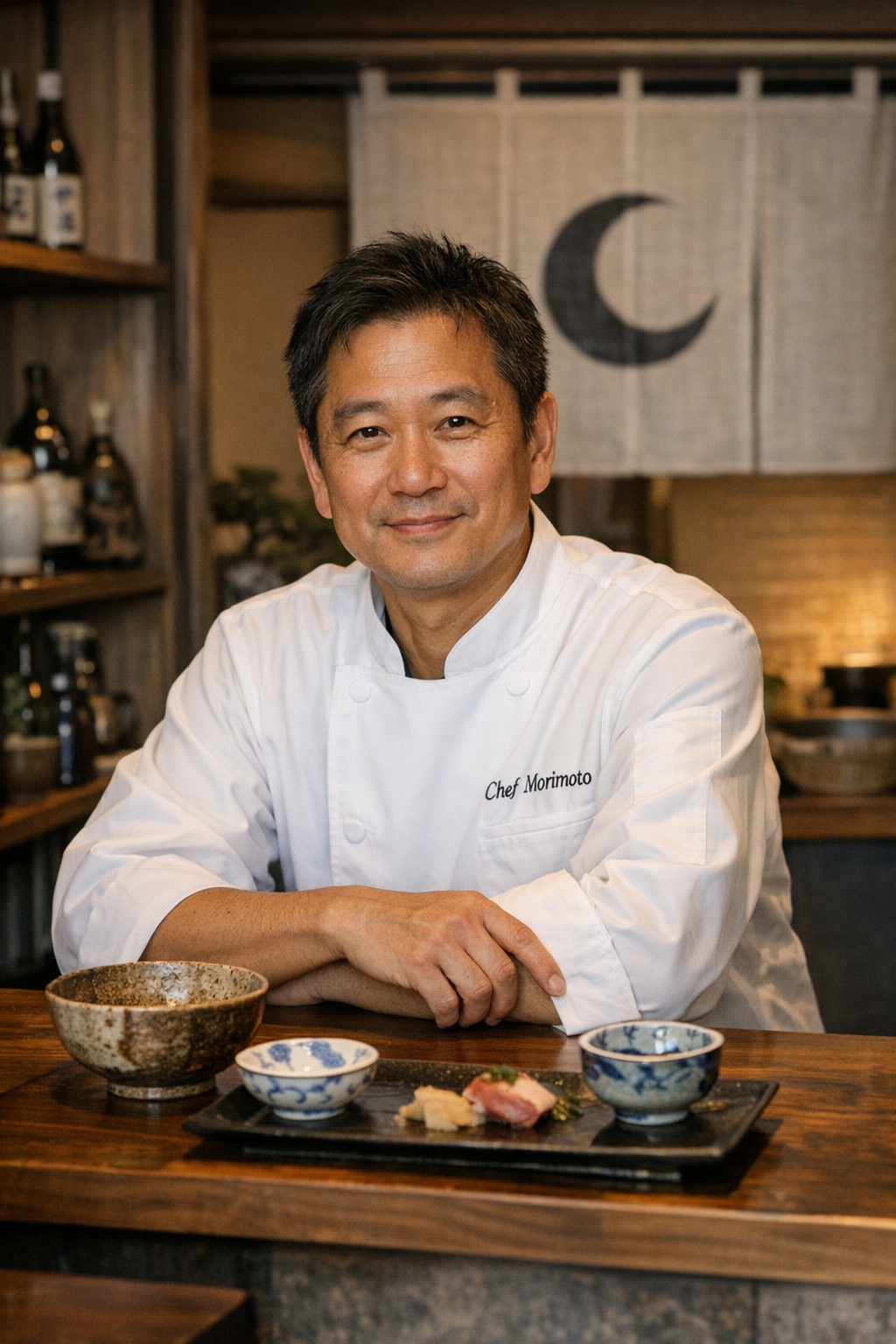
Interview – Chef Kenji Morimoto, Head Chef of “Tsukimi” (Paris)

We spoke with Kenji Morimoto, head chef of Tsukimi, a kaiseki-inspired Japanese restaurant in Paris, about how he sources tableware for his kitchen and why the right piece can change how a dish is perceived. Here’s what he told us.

Can you introduce yourself and your restaurant?
My name is Kenji Morimoto, and I am the head chef of Tsukimi, a Japanese restaurant located in Paris. Our cuisine is inspired by traditional kaiseki, with a strong focus on seasonality, balance, and visual harmony. For us, presentation is as important as taste.

Why is tableware so important in Japanese cuisine?
In Japanese gastronomy, tableware is part of the dish. The plate, the bowl, the texture, and even the weight in the hand influence how the guest experiences the food. A dish served in the wrong bowl can lose half of its meaning. That’s why we are extremely careful when choosing our tableware.

How did you come to work with Akazuki’s wholesale department?
When opening the restaurant, we were looking for authentic Japanese tableware that would suit a professional kitchen in France. Akazuki immediately stood out because they understand both Japanese craftsmanship and the practical needs of restaurants. Their wholesale department made it easy to order consistent collections in larger quantities.

What do you appreciate most about working with Akazuki?
First, the quality and authenticity of the products. The ceramics feel true to Japanese traditions, yet they work perfectly in a modern Parisian restaurant. Second, the guidance: the wholesale team helped us select pieces that matched our menu and explained which items were best suited for intensive restaurant use.

Have you ever had a sourcing experience elsewhere that didn’t work out, and what made the difference with Akazuki?
Before working with Akazuki, we tried importing through a smaller reseller, and the issue was always consistency. We’d order a set of bowls, and the next batch would be slightly different in size or glaze. With Akazuki, what we order is what we get, batch after batch, which matters enormously when you’re trying to keep your tables looking the same every night.

How does the ordering process work for you?
It’s very smooth. We can plan our orders in advance, reorder the same references, and ensure visual consistency across the tables. This is essential for us, especially when replacing or expanding our tableware over time.

Is there a specific piece in your restaurant that guests always comment on?
Our donburi bowls, actually. They’re simple, but the glaze catches the light in a way that makes the dish look more vivid than it would on a plain white plate. It’s a small thing, but guests notice it more than I expected when we first started using them.

Would you recommend Akazuki to other chefs or restaurateurs?
Absolutely. For chefs who care about authenticity, aesthetics, and reliability, Akazuki is a trusted partner. Their wholesale department truly understands what restaurants need, not just from a design point of view, but also from an operational one.

A final word?
Good food deserves the right stage. With Akazuki’s tableware, we feel that our dishes are presented the way they were meant to be seen.

Looking to source the kind of tableware Chef Morimoto relies on? Request our wholesale catalog, or browse our full tableware range.

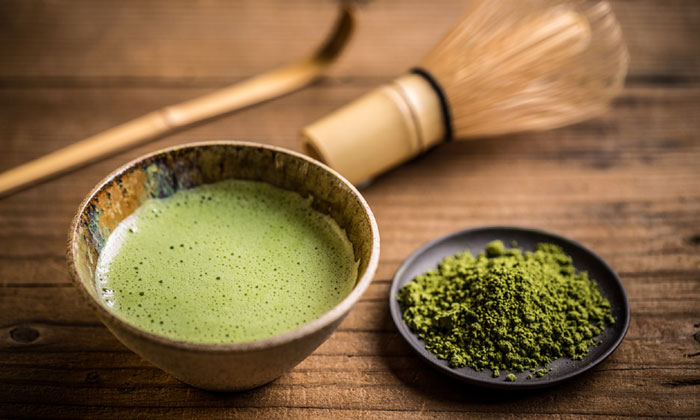
Matcha bowl

The role of tableware in a traditional Japanese meal

Why the right dish matters as much as the recipe

Walk into a well-run Japanese restaurant and you’ll notice something before the food even arrives: nothing on the table is generic. Every bowl, plate, and cup was chosen for what it’s about to hold, not picked from a single matching set.

One dish, one designated piece

A traditional Japanese meal arrives as several small dishes rather than one large plate, and each gets its own vessel: rice in a lidded chawan, soup in a shiru-wan, side dishes in a kobachi, and individual portions on a small sara. The variety isn’t decorative, it’s how the meal stays organized on a small table.

Color and shape follow the season

Seasonality shapes the choice of Japanese tableware as much as it shapes the menu. Cool blue or pale ceramics tend to appear in summer settings, while heavier, earth-toned pottery shows up once the weather turns. A restaurant rotating its tableware by season is signaling the same seasonal care a Japanese kitchen applies to its ingredients.

Drinkware gets the same treatment

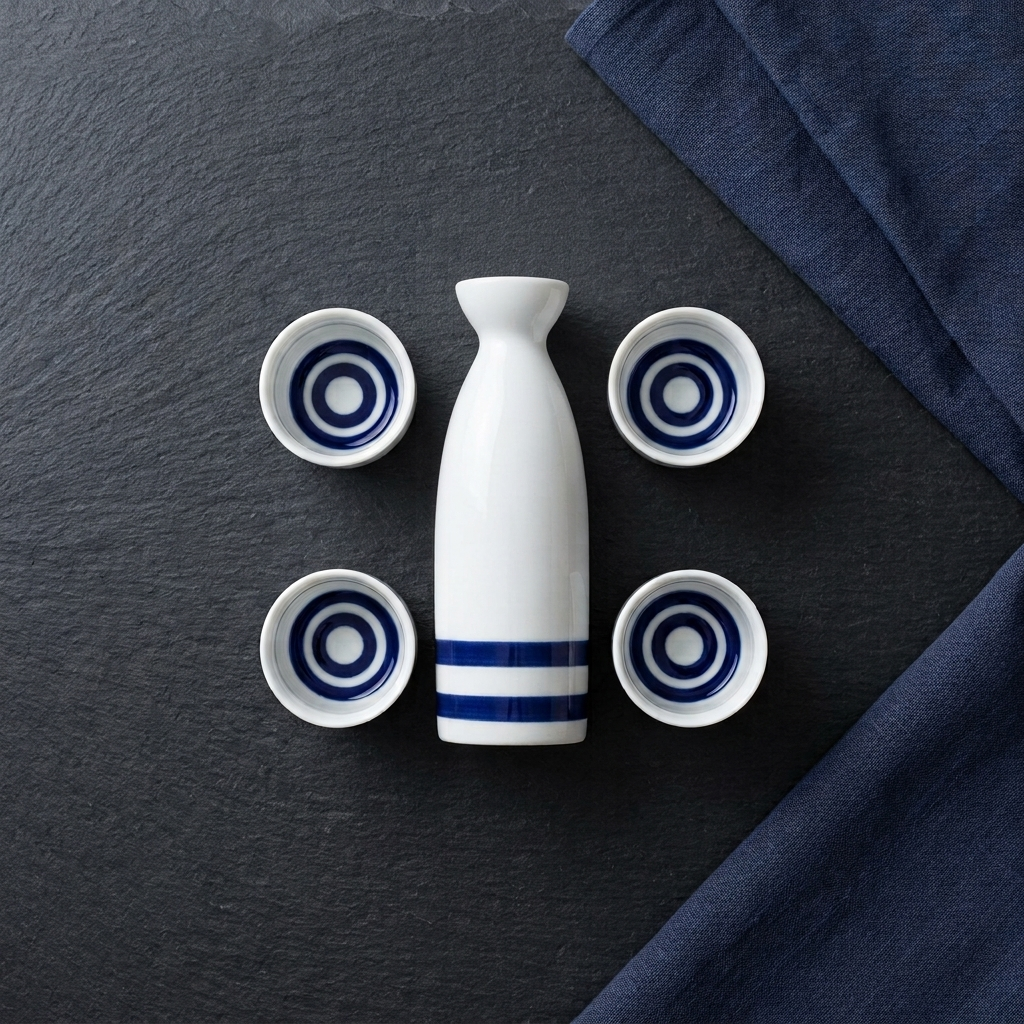
Sake is served in small ochoko cups, ceramic or wood, and tea in yunomi cups, each shaped for the drink it holds rather than reused across both. It’s a small detail, but it’s one regular customers notice, even if they couldn’t say exactly why the cup felt right.

Chopsticks and their resting place

Chopsticks, or hashi, are placed on a hashi-oki, a small rest, whenever they’re not in use rather than left directly on the table or propped on a plate. It’s a minor piece of tableware that restaurants often forget to budget for, and one that’s easy to add to an order alongside bowls and plates.

Mixing traditional pieces into a non-Japanese menu

You don’t have to run a fully traditional kaiseki menu to use this approach. A lot of the Western restaurants we work with use just two or three pieces, a kobachi for a starter, a donburi for a rice bowl special, an ochoko repurposed as a sake or shot serving cup, to bring a Japanese sensibility into an otherwise Western menu without committing to a full table setting.

A few questions we get from first-time buyers

Do I need a full matching set to get this right? No. Most kitchens build this up gradually, starting with bowls and plates for their two or three signature dishes, then expanding as the menu grows.

What’s the minimum I need to start? A chawan, a kobachi, and a sara cover the vast majority of starter and side dish presentations. Soup bowls and drinkware can come in a second order once the core pieces are in place.

What this means if you’re sourcing for a restaurant

If you’re putting together a Japanese menu, the practical takeaway is this: budget for variety, not just volume. A kitchen that only stocks one bowl size and one plate shape will struggle to present dishes the way customers expect, even if the food itself is excellent. Request our catalog to see the full range of pieces built for this kind of table setting.

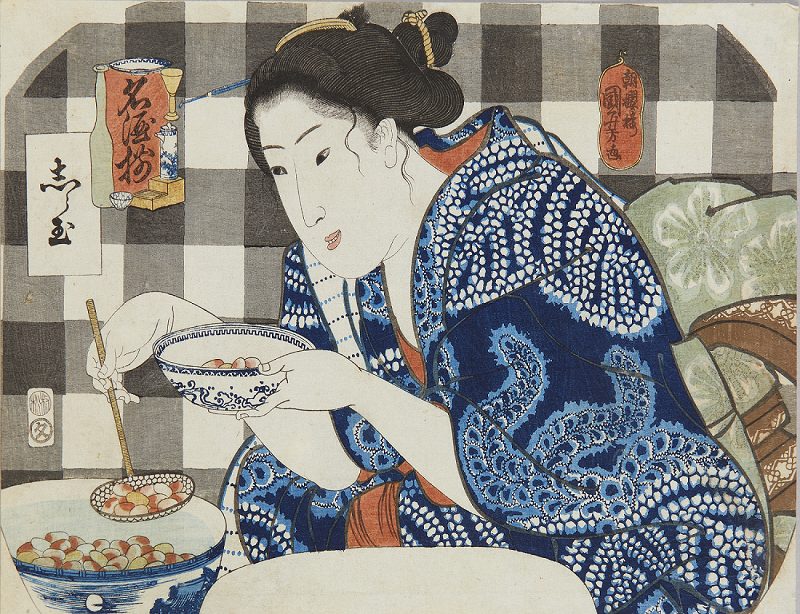
japanese ukiyoe

Japanese tableware: from ancient times to modern day

Japanese tableware is a work of art, mirroring the country’s profound respect for nature, craftsmanship, and culinary culture. For centuries, these pieces have not merely been tools for eating and drinking, but have reflected the aesthetic and philosophical elements of Japanese life.

A journey to ancient Japan

In the Jomon period (14,000–300 BC), the earliest known pottery in Japan was created. These ceramics were coil-made and decorated with intricate cord-marked patterns, called jomon, which is where the period gets its name. They were built by hand, without a wheel, layering coils of clay and smoothing them into shape, showcasing a level of creativity and skill remarkable for tools this old.

Evolving through the ages

The following Yayoi period (300 BC – 300 AD) saw the introduction of wheel-thrown pottery and iron tools, which revolutionized tableware production. Iron tools allowed for more refined shapes, and the pottery wheel led to more symmetrical pieces, a marked shift from the freer, hand-built forms of the Jomon period.

During the Kofun and Asuka periods (300–710 AD), Sue pottery emerged, introduced from the Korean peninsula. Fired at much higher temperatures in climbing kilns dug into hillsides, Sue ware was far stronger and more durable than anything produced before it, and it laid the groundwork for the stoneware traditions that followed.

Influence of tea ceremony

The Muromachi period (1336–1573) was transformative. The Japanese tea ceremony, or ‘chanoyu,’ became popular, heavily influencing tableware aesthetics. The ceremony emphasizes simplicity and naturalness, traits that started to get incorporated into ceramic production. Wabi-Sabi, the concept of finding beauty in imperfection, became a guiding philosophy in tableware, and it’s a philosophy that still shapes how a lot of Japanese pottery is made today.

Regional diversification

Japan’s diverse geography and regional climates have led to distinct styles in tableware. Arita porcelain, known for its intricate designs and superior quality, comes from the Saga prefecture and remains one of Japan’s most recognized export wares. The rustic Bizen-yaki from Okayama is fired unglazed at very high temperatures, prized for its earthy, natural surface texture rather than any painted decoration. The Mino region, in Gifu, is famous for its Oribe and Shino wares, recognized for their unique glazing techniques, while Hagi ware, from Yamaguchi, is known for a soft, porous glaze that changes color subtly with years of use.

Modern Japanese tableware

In contemporary Japan, the traditional styles coexist with modern designs. Japanese potters are renowned for their innovation while respecting ancient aesthetics. Whether it’s minimalistic Hasami porcelain or vibrant Kutani ceramics, Japanese tableware continues to mesmerize with its blend of old and new.

A few questions about Japanese pottery regions

Which is more durable for restaurant use, Arita or Mino ware? Arita porcelain is fired at a higher temperature and is generally harder and more chip-resistant. Mino-style stoneware, especially Shino and Oribe glazes, is a little softer but makes up for it with a distinctive, textured look that porcelain can’t replicate.

Is Kutani ware practical for daily use, or mostly decorative? Both. Kutani is known for bold, colorful overglaze painting, and while some pieces are collector-grade decorative ware, most of what’s produced today is fully functional tableware suited to regular use.

What this history looks like on a shelf today

Most of the regional styles above are still in active production, and still available wholesale. Arita porcelain remains one of the most requested origins among our restaurant customers for a refined, classic look, while Mino-style glazing shows up frequently in the more rustic, modern pieces retailers have been asking for lately.

Centuries of regional craftsmanship are part of what you’re actually buying when you stock Japanese tableware, not just a plate or a bowl. Request our catalog to see which regional styles we currently carry.

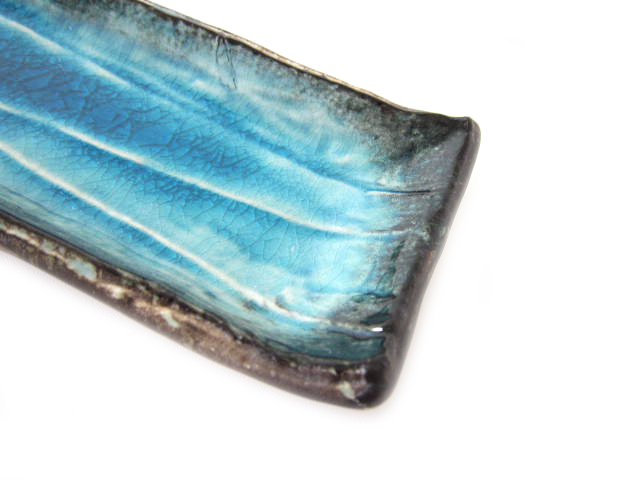
japanese nagazara

The ultimate guide to Japanese plates

Beauty and Functionality in Harmony

Japanese cuisine is a unique blend of flavors, visual appeal, and cultural significance, and the vessels used to serve it play a vital role in enhancing this experience. Plates, just like bowls, carry their own importance in Japanese dining culture. This guide aims to provide a comprehensive understanding of the variety and uses of Japanese plates, along with their cultural significance.

1. Dinner plates (Osara)

Japanese dinner platesThe Osara, the Japanese equivalent of a dinner plate, is used for serving a variety of dishes. Osara are often made from ceramics and can vary greatly in size, shape, and design based on the specific food being served.

2. Sushi plates (Sushi-Zara)

Japanese sushi platesSushi-Zara are rectangular or oval plates specifically designed for serving sushi. Their elongated form provides the perfect platform for presenting sushi rolls or nigiri in an elegant and organized manner.

3. Small plates (Kozara)

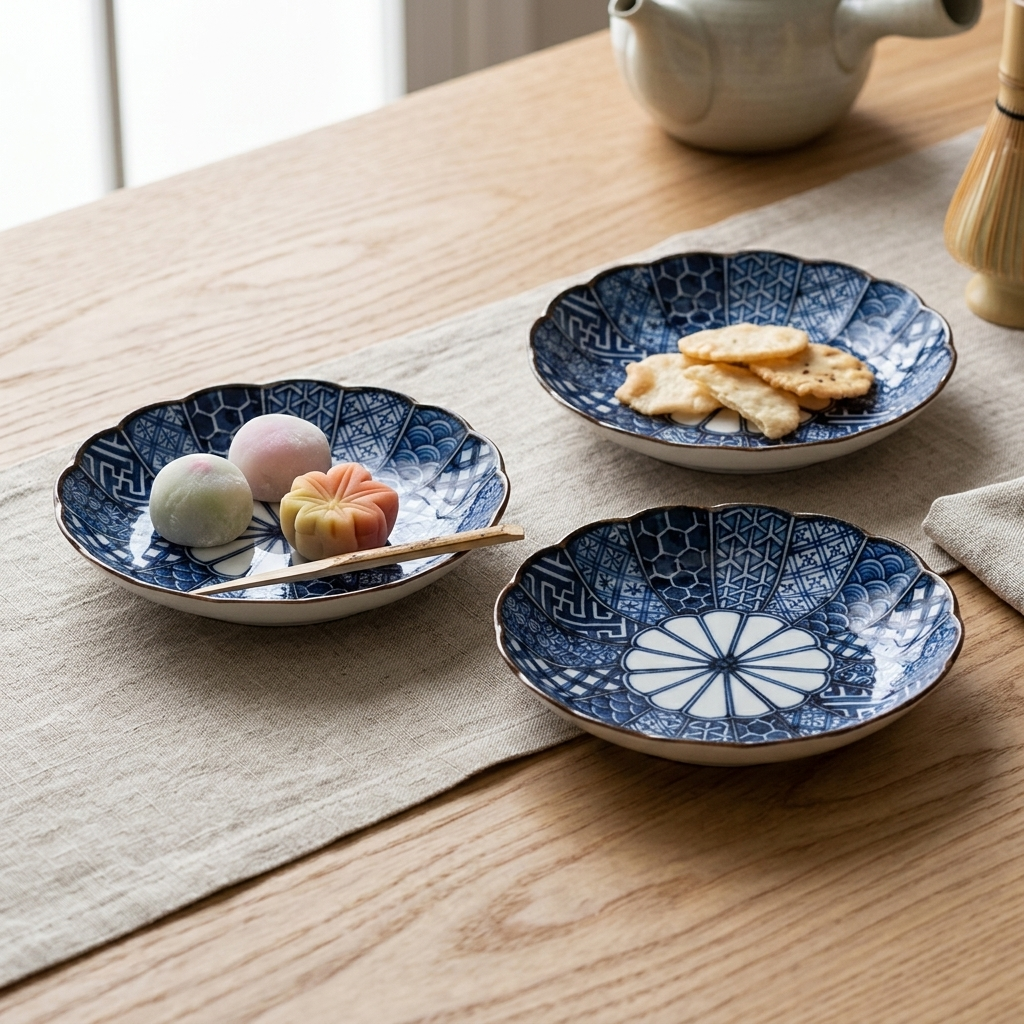
Japanese small platesKozara are small plates used for individual servings of appetizers, side dishes, or condiments. They are typically used to serve foods like pickles, wasabi, or soy sauce.

4. Long plates (Nagazara)

japanese nagazaraNagazara, or long plates, are used for serving long, slender foods like grilled eel, tempura, or yakitori skewers. They are also perfect for arranging slices of sashimi.

5. Square plates (Kaku-zara)

Japanese square platesKaku-zara are square plates that are often used to serve traditional Japanese sweets or bite-sized appetizers. They are also popular for Bento lunches, as they allow for neat compartmentalization of different food items.

6. Serving platters (Sanbo or Dai)

Japanese large platesThese larger trays or platters are used to serve communal dishes or an array of different foods for multiple people. They are often used in formal dining situations.

Aesthetic and cultural significance of Japanese plates

Japanese plates are not just about functionality. They are a form of artistic expression and reflect the deep-rooted aesthetics of Japanese culture. The colors, patterns, and shapes are carefully chosen to complement the food and the occasion. For example, a sushi plate might be simple and monochrome to allow the vibrant colors of the sushi to stand out, while a plate used for a festive occasion might be more ornate.

Ceramic plates, in particular, are a testament to Japan’s rich pottery tradition. Different regions of Japan have distinct ceramic styles, and owning a variety of plates from different regions can provide a unique, diverse dining experience.

How Japanese plates are actually made

Most of the plates in this guide come from one of four production regions, each with its own glazing tradition. Arita and Hasami, in Saga and Nagasaki prefectures, are known for porcelain: thin, hard, and typically decorated with cobalt blue underglaze painting (sometsuke) or more elaborate overglaze enamels. Mino, in Gifu, produces a wider mix of styles, including the rougher, more textured Oribe and Shino glazes seen on rustic-style plates. Banko, in Mie, leans toward stoneware with a heavier, more matte finish.

The practical upshot for a buyer: porcelain plates from Arita or Hasami tend to be lighter and chip less easily at the edge, while Mino-style stoneware has more visual texture but is generally heavier per piece, worth factoring in if your servers are carrying loaded trays all night.

Choosing the right plate for your home

When choosing Japanese plates for your home, consider both their practical use and their aesthetic appeal. If you often enjoy sushi at home, having sushi-zara would be beneficial. If you frequently host parties, larger serving platters would be a great addition.

Remember, in Japanese dining, the visual presentation of the food is almost as important as the taste. So, take into account the colors and textures of the food you typically serve when choosing your plates.

Caring for your Japanese plates

Most Japanese plates, particularly those made of ceramics, are dishwasher safe. However, hand-painted or lacquerware plates should be hand-washed to maintain their appearance. Never use metallic or lacquerware plates in a microwave.

Built for daily use, not just display

A plate that looks perfect on a shelf doesn’t always survive a Friday dinner service. For commercial use, three things matter more than pattern: chip resistance at the rim, stackability without the glaze scratching the plate underneath, and a flat base that won’t wobble on an uneven table. Porcelain generally wins on chip resistance, vitrified stoneware wins on weight and heat retention, and a slightly raised foot ring makes the biggest difference for clean stacking.

What sells best for restaurants

Of everything on this list, chu-zara and the rectangular sushi-zara move fastest among our wholesale customers, mainly because they cover the widest range of dishes without needing a full matching set. If you’re stocking for the first time, those two shapes are the safest starting point before expanding into kaku-zara and serving platters.

Common questions from wholesale buyers

Can I mix patterns within the same order? Yes. Most restaurants build a base set in one neutral pattern, often a plain Arita white or celadon, and add one or two accent patterns for specific dishes rather than matching everything.

Do hand-painted plates need different care than printed ones? Generally yes. Hand-painted overglaze decoration can wear faster under commercial dishwasher detergents than underglaze (sometsuke) designs, where the pattern is sealed beneath the glaze itself.

What’s a realistic reorder cycle? Most restaurants we work with reorder core shapes, chu-zara and sushi-zara, every 6 to 12 months to cover breakage, and treat seasonal or accent patterns as a lower, occasional volume.

Japanese plates reflect a principle worth keeping in mind when sourcing tableware: beauty and function aren’t separate decisions, the right plate is chosen because it serves the food better, not just because it looks good. See our full wholesale plate range or request pricing for professionals.

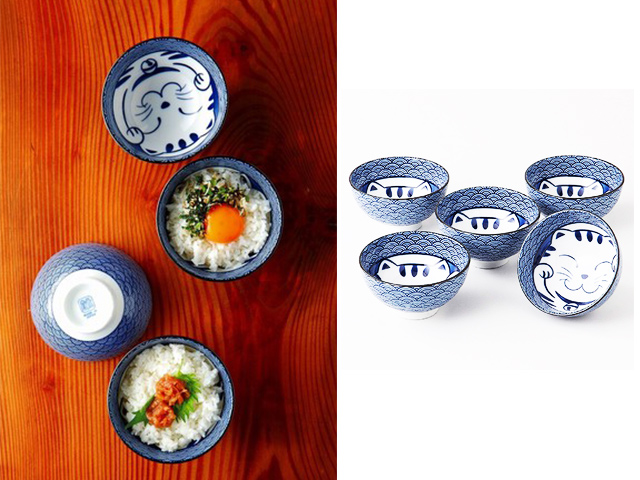
Menbachi bowls

The ultimate guide to Japanese bowls

An indispensable part of traditional cuisine

Japanese cuisine is a captivating symphony of flavors, colors, and textures, deeply rooted in the country’s history and cultural traditions. However, it is not only the food that plays a crucial role in this culinary orchestra but also the vessels in which it is served. Among them, Japanese bowls, with their varied shapes, sizes, and designs, hold a special place. This guide will walk you through the diverse world of Japanese bowls, their uses, and their cultural significance.

1. Rice bowls (Chawan)

Japanese rice bowlsThe chawan, a cylindrical rice bowl slightly smaller than a western soup bowl, is a staple in Japanese dining. Typically used for serving steamed rice, the backbone of almost every Japanese meal, the chawan comes in various sizes and designs, often made of ceramic or lacquerware.

2. Soup bowls (Wan)

japanese soup bowlsWan is a generic term for bowls in Japanese, but it’s often used to refer specifically to miso soup bowls. These bowls are typically made of lacquered wood and have lids to keep the soup warm. The lid also serves the purpose of enhancing the eating experience by letting the diner enjoy the aroma of the soup when lifted.

3. Noodle bowls (Menbachi or Donburi)

Menbachi bowlsMenbachi, meaning “noodle bowl,” is larger and deeper than the standard rice bowl, designed to hold the hearty servings of ramen, udon, or soba noodles. On the other hand, Donburi bowls are used for dishes where various ingredients are served over a bed of rice, such as gyudon (beef bowl) or katsudon (pork cutlet bowl).

4. Tea bowls (Chawan)

japanese matcha bowlsWhile the term ‘chawan’ is used for rice bowls, it also refers to the bowls used in the Japanese tea ceremony, known as ‘matcha chawan’. These matcha bowls are crafted with artistic precision and are often rustic and irregularly shaped, reflecting the wabi-sabi aesthetics of the tea ceremony.

5. Serving bowls (Owan)

Japanese bowls with lidsOwan refers to larger bowls used for serving communal dishes or individual portions of larger dishes like stews or hot pots. They can be lidded, similar to miso soup bowls, and are commonly made of ceramic, glass, or lacquered wood.

6. Soba bowls (Soba Choko)

Japanese soba chokoDespite the name, soba choko is a versatile piece of tableware and can be used for more than just soba noodles. It is smaller and often used for side dishes or dipping sauces.

The aesthetic and cultural significance of Japanese bowls

Beyond their functional role, Japanese bowls carry a deep aesthetic and cultural significance. They are carefully selected to complement the color, texture, and shape of the food, enhancing the overall dining experience. The choice of bowl is also influenced by the season, occasion, and the personal preference of the host.

Choosing the right bowl for your home

When selecting Japanese bowls for your home, consider both the functional aspects and the aesthetic appeal. Choose bowls that will serve the types of meals you prepare most often. For instance, if you love making ramen, a deep, wide Menbachi will be indispensable. If you regularly enjoy rice dishes, investing in beautifully crafted chawan would be a good choice.

Remember, the beauty of Japanese bowls lies not only in their individual charm but also in how they harmonize with the food and other tableware. So, consider the overall palette of your dishes and your dining decor when choosing your bowls.

Caring for your Japanese bowls

To maintain the beauty and longevity of your Japanese bowls, treat them with care. Many Japanese bowls, especially those made of lacquerware or hand-painted ceramics, should be hand-washed. Avoid using abrasive cleaners, and never use them in a microwave if they are made of metal or have metallic accents.

Ceramic, lacquerware, or resin: which to stock

Bowls come in three main materials, and the right one depends on how the bowl will actually be used. Ceramic and porcelain hold heat well and look the part, but they’re heavier and will eventually chip. Lacquerware (urushi-finished wood) is lighter and naturally insulating, which is why it’s still the standard for miso soup bowls, but it can’t go in a dishwasher or microwave. Resin and melamine versions, made to mimic lacquerware, trade some of that authenticity for being dishwasher-safe and far more break-resistant, which is why a lot of busy ramen counters and izakaya use them for high-turnover service while keeping the real lacquerware for tableside presentation.

The bowl restaurants reorder most

Among our wholesale customers, the menbachi is consistently the highest-reorder item. Restaurants serving ramen or udon go through them fast, and unlike a chawan, a chipped menbachi is hard to hide on a busy service line. If you’re building a Japanese menu from scratch, it’s worth stocking menbachi in volume before anything else on this list.

Common questions from wholesale buyers

Are lacquerware bowls actually durable enough for daily restaurant use? Good quality urushi lacquerware holds up well for years if it’s hand-washed and not soaked, but it’s not a fit for a high-speed dishwasher line. If your kitchen runs an industrial dishwasher, melamine is usually the safer call for everyday service.

What size menbachi should I start with? Most ramen and udon menus run on a single menbachi size around 800ml to 1000ml capacity, large enough for noodles, broth, and toppings without needing a second, bigger size for most dishes.

Can chawan and matcha chawan be the same bowl? Technically the word is shared, but a rice chawan is usually smaller and more upright, while a matcha chawan is wider and shallower to make whisking easier. Worth ordering them separately even though the name overlaps.

Beyond function, these bowls carry the spirit of Japanese hospitality with them: balance, harmony, and an attention to detail that shows in every dish they hold. See our full wholesale bowl range or request pricing for professionals.