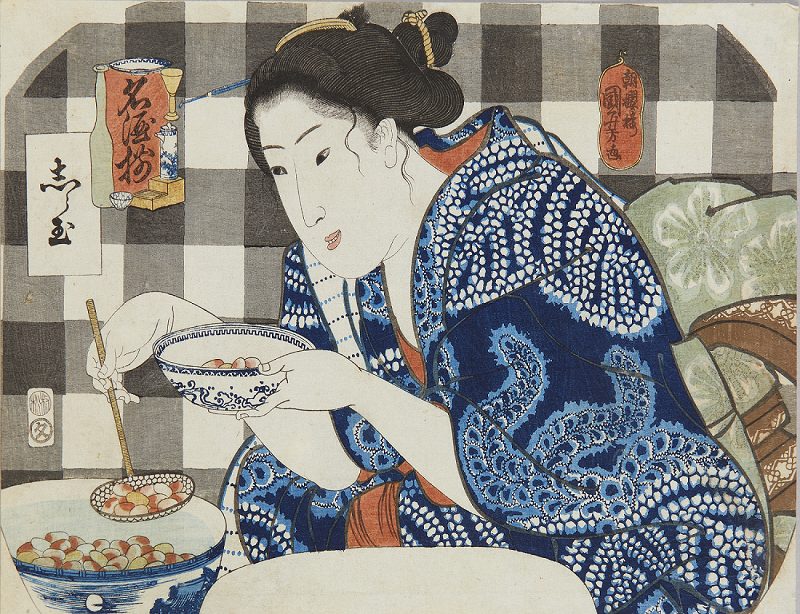
Japanese tableware is a work of art, mirroring the country’s profound respect for nature, craftsmanship, and culinary culture. For centuries, these pieces have not merely been tools for eating and drinking, but have reflected the aesthetic and philosophical elements of Japanese life.
A journey to ancient Japan
In the Jomon period (14,000–300 BC), the earliest known pottery in Japan was created. These ceramics were coil-made and decorated with intricate cord-marked patterns, called jomon, which is where the period gets its name. They were built by hand, without a wheel, layering coils of clay and smoothing them into shape, showcasing a level of creativity and skill remarkable for tools this old.
Evolving through the ages
The following Yayoi period (300 BC – 300 AD) saw the introduction of wheel-thrown pottery and iron tools, which revolutionized tableware production. Iron tools allowed for more refined shapes, and the pottery wheel led to more symmetrical pieces, a marked shift from the freer, hand-built forms of the Jomon period.
During the Kofun and Asuka periods (300–710 AD), Sue pottery emerged, introduced from the Korean peninsula. Fired at much higher temperatures in climbing kilns dug into hillsides, Sue ware was far stronger and more durable than anything produced before it, and it laid the groundwork for the stoneware traditions that followed.
Influence of tea ceremony
The Muromachi period (1336–1573) was transformative. The Japanese tea ceremony, or ‘chanoyu,’ became popular, heavily influencing tableware aesthetics. The ceremony emphasizes simplicity and naturalness, traits that started to get incorporated into ceramic production. Wabi-Sabi, the concept of finding beauty in imperfection, became a guiding philosophy in tableware, and it’s a philosophy that still shapes how a lot of Japanese pottery is made today.
Regional diversification
Japan’s diverse geography and regional climates have led to distinct styles in tableware. Arita porcelain, known for its intricate designs and superior quality, comes from the Saga prefecture and remains one of Japan’s most recognized export wares. The rustic Bizen-yaki from Okayama is fired unglazed at very high temperatures, prized for its earthy, natural surface texture rather than any painted decoration. The Mino region, in Gifu, is famous for its Oribe and Shino wares, recognized for their unique glazing techniques, while Hagi ware, from Yamaguchi, is known for a soft, porous glaze that changes color subtly with years of use.
Modern Japanese tableware
In contemporary Japan, the traditional styles coexist with modern designs. Japanese potters are renowned for their innovation while respecting ancient aesthetics. Whether it’s minimalistic Hasami porcelain or vibrant Kutani ceramics, Japanese tableware continues to mesmerize with its blend of old and new.
A few questions about Japanese pottery regions
Which is more durable for restaurant use, Arita or Mino ware? Arita porcelain is fired at a higher temperature and is generally harder and more chip-resistant. Mino-style stoneware, especially Shino and Oribe glazes, is a little softer but makes up for it with a distinctive, textured look that porcelain can’t replicate.
Is Kutani ware practical for daily use, or mostly decorative? Both. Kutani is known for bold, colorful overglaze painting, and while some pieces are collector-grade decorative ware, most of what’s produced today is fully functional tableware suited to regular use.
What this history looks like on a shelf today
Most of the regional styles above are still in active production, and still available wholesale. Arita porcelain remains one of the most requested origins among our restaurant customers for a refined, classic look, while Mino-style glazing shows up frequently in the more rustic, modern pieces retailers have been asking for lately.
Centuries of regional craftsmanship are part of what you’re actually buying when you stock Japanese tableware, not just a plate or a bowl. Request our catalog to see which regional styles we currently carry.
Leave a Reply